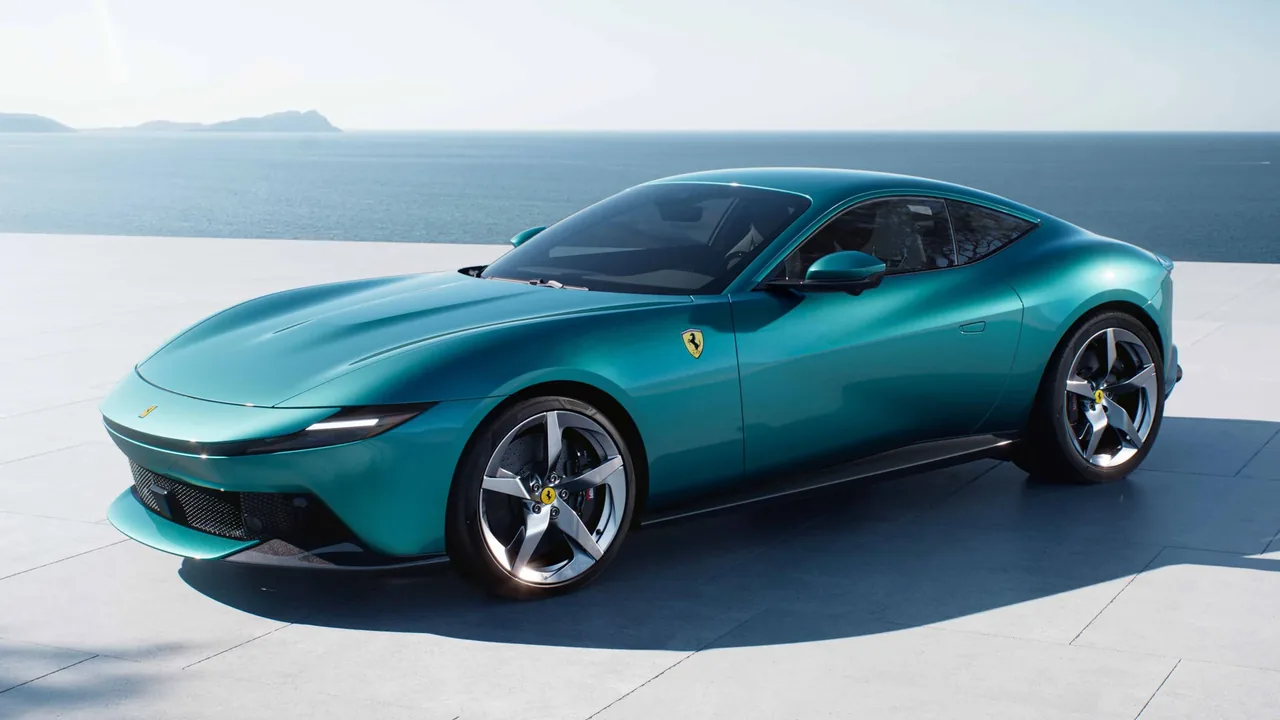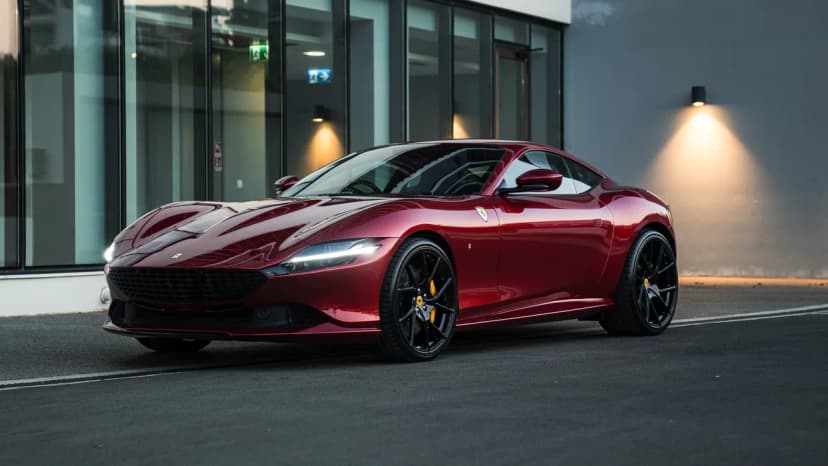
Ferrari Roma in Cyprus
Under the bonnet is the 3.9-litre twin-turbo V8 from the family named best engine in the world four years running, a run no other manufacturer has put together. And the Roma is the one Ferrari built away from the track: you take it out to dinner rather than trailer it somewhere at the weekend. On an island of short roads that distinction decides the purchase.
Which versions are worth importing
There is one real choice, coupe or Spider, and the island argues for the Spider. After that the car is defined not by version but by order: carbon inside and out, the passenger display, Daytona-style seats and a colour outside the standard book. None of it can be added once the car exists, and it is exactly what the next buyer looks for when you come to sell.
Coupe or Spider is the real decision and the island argues for the Spider. Beyond that the car is defined by how it was ordered: carbon exterior and interior packs, the passenger display, the Daytona-style seats and a factory colour outside the standard range are what separate one Roma from another, and they are what the next buyer looks for. None of it can be specified after the car exists.
Buying a used Ferrari Roma: what matters
On a Ferrari the documents are the car: dealer service history, scheduled work completed and documented, structural integrity and any track note — read in full before you choose. A Roma with gaps in its record is not a cheaper Roma; we do not shortlist those.
The factory build sheet is pulled by chassis number and attached to the report, because on this model the order is the car. Service history is read for work done within the manufacturer's own network, and clutch wear is taken as a measured reading rather than an impression. Where the extended factory warranty is still live we confirm in writing how many years remain and what carries over to you, before the car is bought.
Common mistakes when buying one
The first is chasing price: on this marque cheaper almost always means weaker on documents. The second is accepting an incomplete service history on the assumption it can be rebuilt later — it cannot. The third is underestimating scheduled work at marque rates. The fourth is comparing prices instead of documents: on a Roma the service history moves the value further than any negotiation on the advert.
Where we source from and why
We search Britain and Japan at once: the UK gives right-hand-drive volume and dealer histories, Japan surfaces exceptionally kept cars with the auction sheet. The marque's official service operates in Nicosia — for an imported car that matters.
A Roma reaching the local market is chance; a Roma with its documents complete is rarer still. Watching Britain and Japan together makes the documented car the standard rather than the exception.
Price and what ownership costs
The ownership line that matters is scheduled work at the marque's rates, and the Nicosia service makes that a local matter rather than a flight with the car on a truck. Miss an interval and the car is discounted twice — once by the next buyer, once by the specialist who has to reconstruct what happened.
A Roma standing in Cyprus is priced in its listing. Sourced to order, you get one landed figure and the terms in writing, both before the car is bought.
How a commission works
Documents are settled before your shortlist takes shape. A single agreement then carries the purchase, the shipping, customs, registration and plates, and nothing is billed beyond it.
Say what the Roma has to have, and we will list the candidates that match rather than approximate. Other models are gathered on the Ferrari page, together with the cars in stock in Cyprus. We look across the UK, Japan and Australia, and buy from whichever holds the right example.