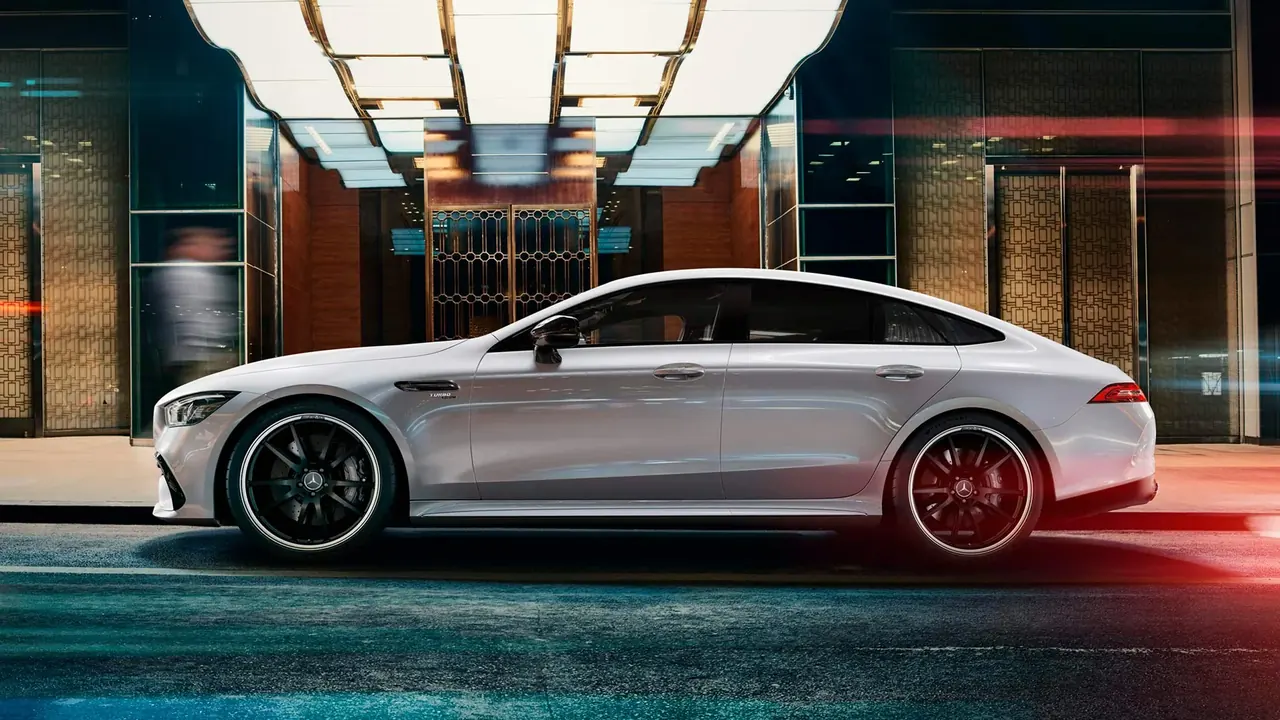
Mercedes-AMG GT in Cyprus
In the two-door AMG GT the engine sits behind the front axle and the gearbox on the rear one: the classic sports-car layout, with weight split almost evenly between the ends. The four-door car is built differently — another platform, another character, closer to a fast saloon than to a coupe. That is the real decision here: two doors for how the car drives, or four for driving it every day.
Which versions are worth importing
The two-door and the four-door are different cars sharing a name: the first is harder and more honest, the second carries four and works every day. Ceramic brakes and the aero packages cost real money and are valued differently on the used market, so we confirm them against the chassis number. Track history is read in the pads and discs long before it shows in the odometer.
Two very different cars share the name. The two-door is a driver's car and is bought as one; the four-door carries the same engines and actually works as the only car in a household. Within the two-door, the earlier rear-drive versions and the current all-wheel-drive car feel unrelated, and the price follows the feeling. Ceramic brakes, the aero package and the seats are the options that decide what the car is worth in three years.
Buying a used Mercedes-AMG GT: what matters
So the records come first: service intervals, brake and tyre history, any note of track use — read plainly and priced in, not talked around. The specification is verified against the chassis number, coupe or four-door alike.
Track history is established from the records before you commit, because on this model it changes both the price and what the pre-purchase inspection has to cover. If ceramic discs are fitted we ask for measured thickness rather than a photograph. The full factory specification is pulled by chassis number and attached as a printout, and where the manufacturer's approved-used cover still runs we confirm in writing what carries over to you.
Common mistakes when buying one
The first is choosing by horsepower when the history of use decides the money. The second is ignoring brake and tyre records, which on this car are the running cost. The third is assuming a track past is either invisible or disqualifying — it is neither, it is a price factor. The fourth is missing that brakes and tyres on an AMG GT can equal a small car's price over a few seasons — none of it appears in the listing.
Where we source from and why
Right-hand-drive AMG GTs surface in Britain with dealer histories and in Japan with auction sheets; supply is thin on both, so we watch the two markets at once and move when the right car appears.
The AMG GT hardly exists on the local market in either body. Sourcing abroad is not an alternative here — it is the way these cars are bought, and the history that comes with the car is what separates them.
Price and what ownership costs
Brakes — ceramic where fitted — and tyres are the real running cost on this car, and a single set of each can equal a modest saloon over a few seasons. Their service entries tell the car's biography better than the seller will, and that biography is what the next buyer pays for or discounts.
If an AMG GT is standing in Cyprus, its price is in the listing. If not, the commission returns one landed figure with the terms, both fixed before the car is bought.
How a commission works
The history is established before your shortlist. One agreement then carries the purchase, the shipping, customs, registration and plates end to end, and once signed the figure is closed.
Say what the AMG GT has to have, and we will bring back candidates that match rather than approximate. Other models are gathered on the Mercedes-Benz page, together with the cars in stock in Cyprus. We look across the UK, Japan and Australia, and buy from whichever holds the right example.