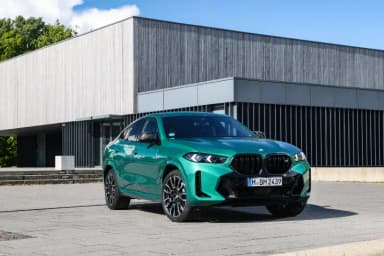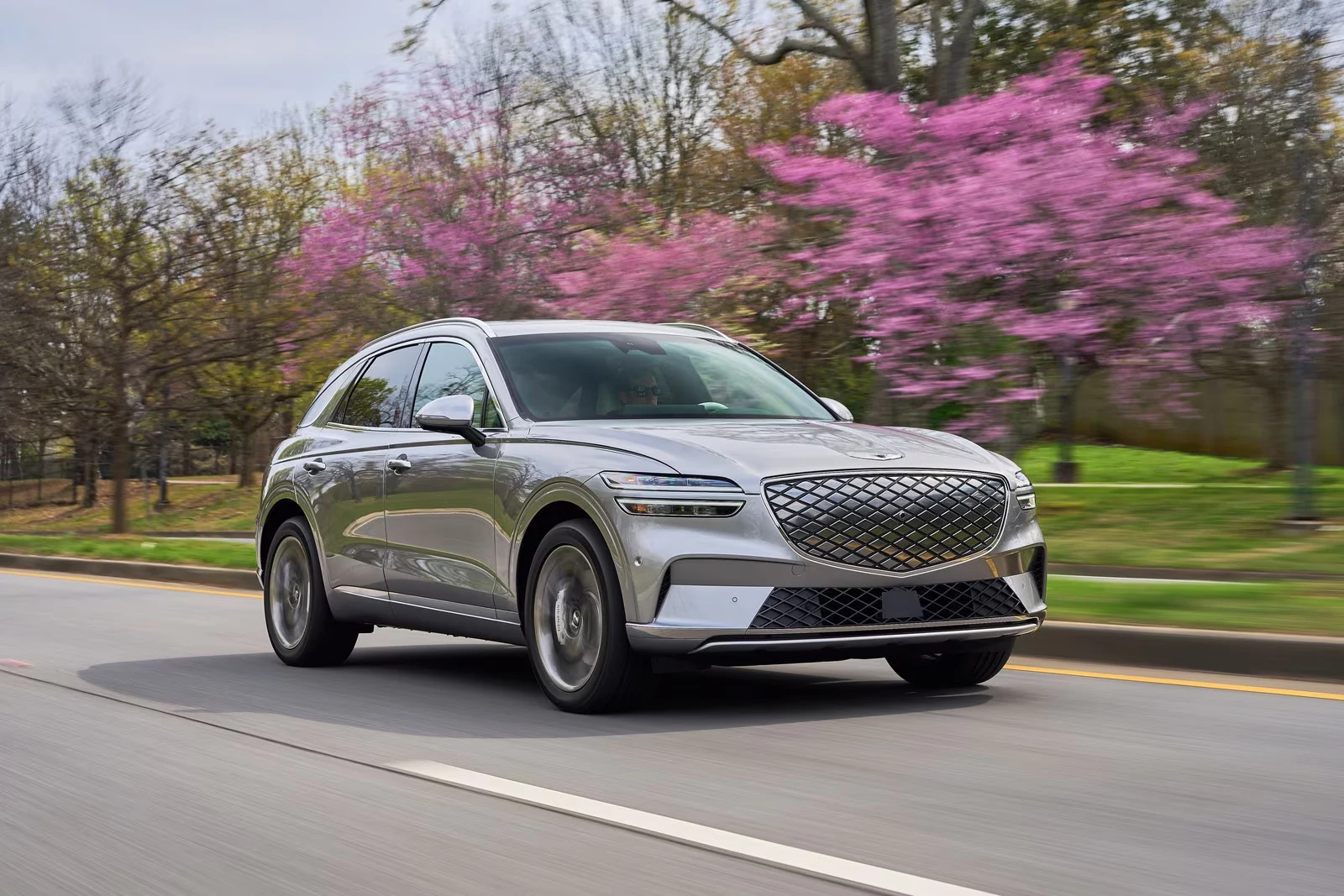
Cyprus suits electric cars better than most of Europe. The island is 240 km end to end, most driving is short and urban, and the annual road tax on a battery electric vehicle is zero. The economics work.
What decides whether ownership is easy or irritating is not the badge on the bonnet. It is which market the car was originally built for, and that is the one thing most buyers never check.
Road tax: the saving that is certain
Battery electric vehicles are 100% exempt from the annual circulation licence fee. Not reduced. Exempt.
For everything else the fee is calculated on CO2 emissions for cars registered from 2014 onward, and on engine capacity for older cars. It runs from around €10 to a capped €1,500 a year. A large petrol SUV sits at the wrong end of that range, and the gap compounds across five or six years.
There is a second saving at the point of import. Registration tax is calculated on CO2, and vehicles emitting under 120 g/km have been exempt. An electric car pays 0% registration tax.
Run your shortlist through the road tax calculator before you decide. The annual difference is usually larger than people expect.
One thing the exemption does not cover is insurance. Premiums on an electric car in Cyprus can run higher than on an equivalent petrol model, because battery replacement is expensive.
The grant: nothing is open
Cyprus ran four rounds of electric vehicle grants from December 2021, distributing close to €50 million. None is open now, and no electromobility grant appears in the 2026 budget.
A targeted programme is expected in 2027, aimed at specific beneficiary groups rather than any qualifying buyer. If you fall into a priority category the wait may be worth a great deal. If not, it may return nothing.
Do not price a grant into a purchase today. Our guide to what the Cyprus EV grant actually paid sets out the real rules, the price caps, and the two to five year ownership lock that still binds everyone who received one.
The charging network, honestly
Cyprus had roughly 250 public charging points in operation at the start of 2026, serving a fleet of about 8,200 electric vehicles. On raw numbers that is serviceable.
The backbone belongs to the Electricity Authority of Cyprus: several dozen stations mixing slower AC points with 50 kW DC units. Around it sit Petrolina’s pcharge network at fuel forecourts, EV Power and corridor operators at shopping centres and on inter-city routes, and slower points at supermarkets, hotels and municipal car parks. Ten 100 kW chargers came online in late 2025 under a five-year public contract.
The weakness is not the count. It is power and distribution. The European Alternative Fuels Observatory classes Cyprus as a market with low recharging power per vehicle, and industry estimates put rural coverage gaps at 15 to 20% of the territory. Provision concentrates in Limassol and Nicosia, thins in Paphos and Larnaca, and thins again outside the cities.
For daily driving between home, office and school this is a non-issue, particularly with a home wallbox, which is how most owners charge. For Troodos weekends and unplanned inter-city runs, plan the stops.
The connector question, which is the real one
Cyprus follows EU charging standards. Type 2 for AC charging, CCS2 for DC fast charging.
Every modern European-specification electric car uses both, through a single combined inlet. So does every Australian-delivered EV, because Australia adopted the same two standards and has required them on new vehicles for years.
Japan did not.
Japanese-market electric cars, including the Nissan Leaf and a long list of others, use Type 1 for AC and CHAdeMO for DC. Both still exist on the island. Neither is what new stations are being built with. The high-power units installed in Cyprus over the last two years are CCS2.
This is the most consequential thing to establish, and it does not show up in listing photographs. A Japanese-specification EV is not unusable here. It is progressively harder to charge, at fewer sites, more slowly, on infrastructure being retired rather than extended. It is worth less on resale for the same reason.
Cyprus drives on the left, so right-hand-drive stock is what matters, which narrows sourcing to the United Kingdom, Japan and Australia. For an electric car two of those three work cleanly: the UK and Australia both deliver Type 2 and CCS2 as standard. Japan is the market to approach with the connector question answered first.
If a particular Japanese car is the one you want, read what to check on a Japanese Tesla before committing to it.
Heat, and what it does to a battery
Cyprus summers are the variable that receives least attention and matters most across a long hold.
Sustained heat accelerates battery degradation, and it is hardest on cars with passive or air-cooled thermal management rather than liquid cooling. The early Nissan Leaf is the documented example. A car that spent its first years in a temperate climate and then lives in Limassol will not follow the manufacturer’s degradation curve.
On anything used, ask for a battery state-of-health reading. Not a range estimate from the dashboard, an actual figure from a diagnostic scan. A three-year-old electric car at 92% health and one at 78% look identical in photographs and are not the same car.
New or used
Electric cars lose value steeply across their first two to three years, more steeply than equivalent petrol models. At three years old the largest loss has already happened, the connector standard is current, and battery health is usually still strong.
That is where the value sits, and it is where the UK market is strongest: a far deeper pool of used right-hand-drive cars on the correct standard than exists on the island, at prices local stock does not match.
What to do now
Check the connector before anything else. Type 2 and CCS2, or reconsider the car.
Get a battery state-of-health figure on any used vehicle. Insist on a diagnostic reading rather than a dashboard estimate.
Calculate the road tax across your shortlist, including the petrol alternatives you are weighing against it — road tax calculator.
Cost the import properly. For a UK car the Telegram bot returns a full landed cost in seconds, covering duty, VAT, shipping and registration.
Plan home charging. A wallbox turns the public network from a dependency into a convenience.
For electric and hybrid cars available on the island now, see the current catalogue. To commission a specific specification, tell us what you are looking for.
Charging network figures: Cyprus Mail, August 2026, and the European Alternative Fuels Observatory. Road tax and registration rates: Road Transport Department, 2026.