



Import process guides
Step-by-step guidance on sourcing, checking, shipping, customs clearance and registration in Cyprus.
Guides

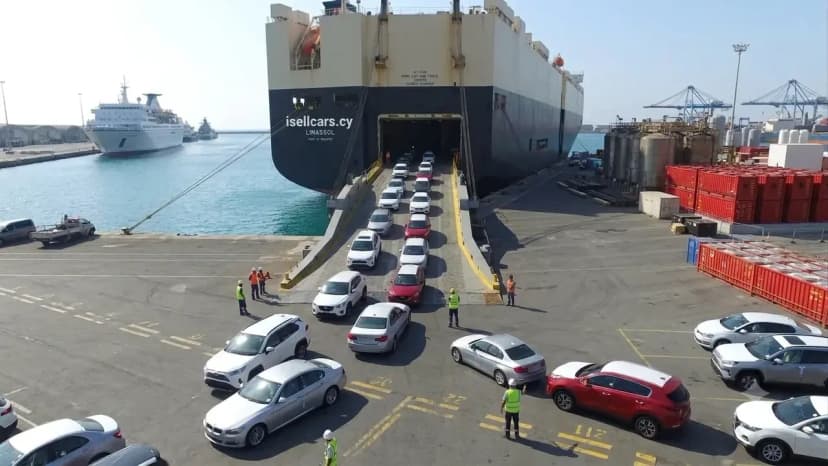

Importing a vehicle to Cyprus comes down to three numbers: what the vehicle costs where it is, what Cyprus charges to let it in and what it will cost to keep. The guides in this section take them one at a time.
Two charges apply to a vehicle arriving from outside the EU. They behave differently. VAT at 19% is charged on the customs value whatever the vehicle's origin. Import duty depends on where the vehicle was built, not where you buy it. A UK-built vehicle can enter at 0% under the EU–UK trade agreement if its origin is proved on the declaration, while one built in a country without an EU agreement pays around 10% of the CIF value, meaning price plus freight plus insurance. A German-built model bought from a British dealer is not British for customs purposes. That single point moves budgets by thousands.
What Cyprus no longer charges matters as much. Excise duty on vehicles was abolished in 2019, which is why premium and large-engined models often cost less to put on the road here than in much of Europe. Annual road tax then takes over. For high-CO₂ models it is steep.
The paperwork follows a fixed order: purchase and export documents, shipping to Limassol, customs clearance, the MOT, registration with the Road Transport Department and plates. From the UK that takes roughly 10 to 30 working days; from Japan and Australia it is usually 16 weeks or more.
Before any of that it is worth asking whether an import makes sense at all. One of the guides below covers the cases where it does not. For a model you have already found in Britain, the UK import calculator puts the full figure on one screen. The import page explains how we run the whole process on your behalf.
