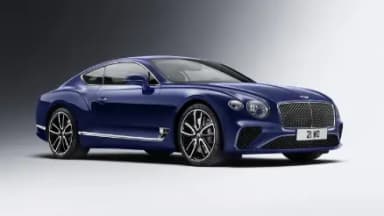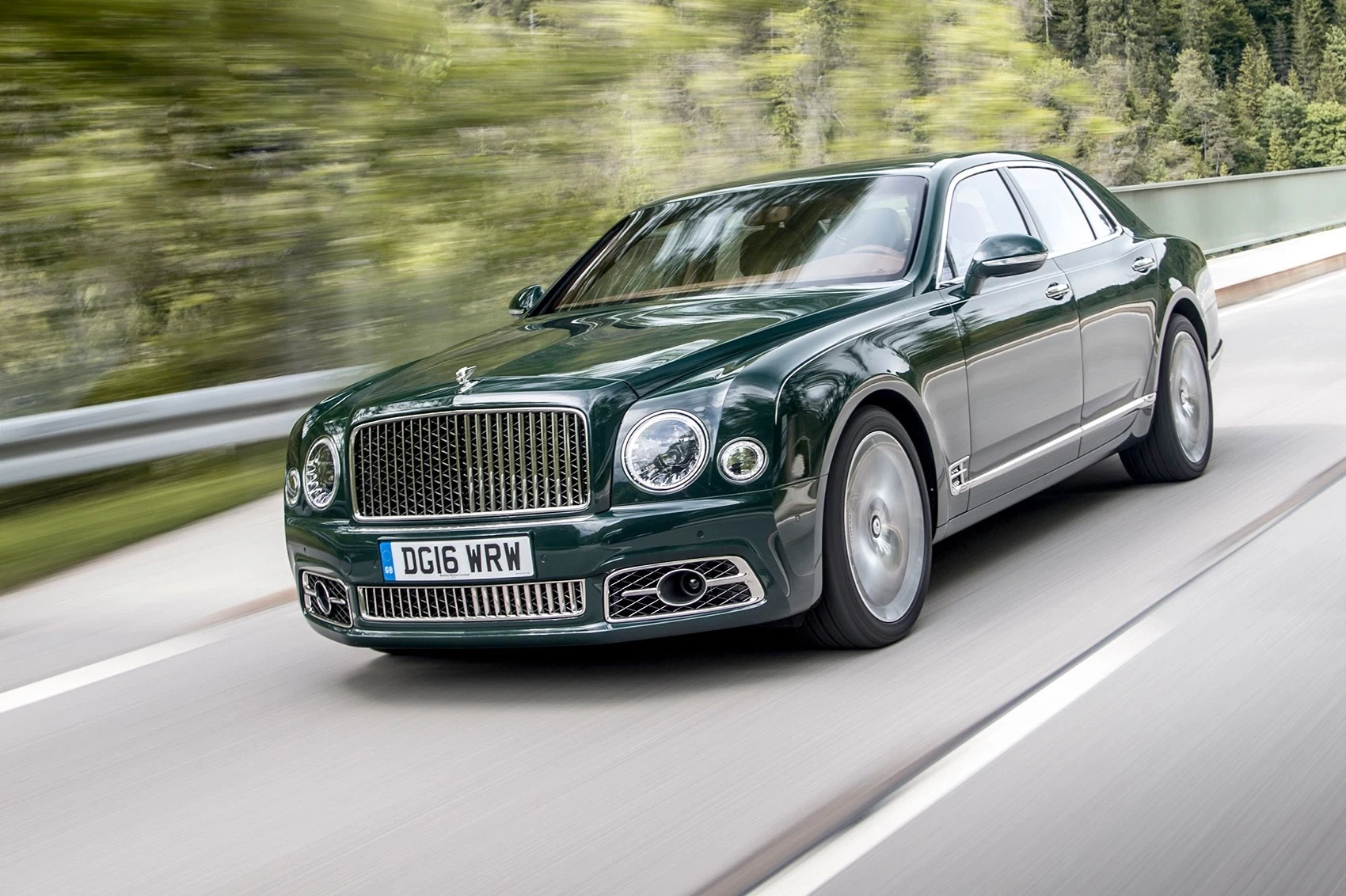
A premium car often costs less to put on the road in Cyprus than in Denmark, the Netherlands or Finland. That much is true. What almost nobody explains is why — and the real reason has very little to do with dealers being generous.
It comes down to how a country taxes a car at the moment you acquire it. Cyprus taxes that moment lightly. Several EU states tax it brutally. Everything else is secondary.
The acquisition tax gap, in numbers
Every EU country charges VAT. Beyond that, most also levy a registration tax when the car first goes on the road, and this is where the spread becomes extraordinary.
Published comparisons of European car taxation put the scale of this at roughly €32,000 of Danish registreringsafgift on a reference car worth €30,000 — the tax reaches a marginal rate of 150% of value, plus a CO2 surcharge. Norway's engangsavgift adds around €15,500 to the same car. Finland charges between 3.3% and 50% depending on price and emissions, and the Netherlands runs its BPM system on a similar principle. These are indicative figures on a single reference car, not quotations for a specific model.
Cyprus charges none of that. Excise duty on motor vehicles was abolished outright by Law 39(I)/2019, published in the Official Gazette of the Republic on 22 March 2019. The Customs and Excise Department states it plainly: from that date, no excise duties are imposed on motor vehicles transported or imported into the Republic. What replaced it is a one-off Euro-standard surcharge running from €0 to €600 depending on emission class and fuel. A Euro 6 petrol car pays nothing at all.
One distinction matters here and is constantly missed: excise duty and import duty are different taxes. Excise duty is gone. Import duty — customs duty on goods entering the EU from a third country — is not, and on a passenger car it runs at roughly 10% of the CIF value, meaning purchase price plus freight plus insurance. Whether you pay it depends entirely on where the car comes from.
The scale of that change is easiest to see on the cars it hit hardest. Reporting at the time of the reform put the excise duty on a large imported SUV at over €15,000 before the change, falling to zero from Euro 6 onward. The same reporting estimated the cost to the Treasury at roughly €15 million a year — about €13 million in lost excise and €2 million in lost VAT. Large-engined, high-emission vehicles were exactly where the old regime bit hardest, which is why abolishing it changed the picture most at the premium end.
VAT reinforces the same pattern without being dramatic about it. Cyprus charges 19%, against an EU average of 21.9%. Only Luxembourg at 17% and Malta at 18% are lower. At the other end sit Hungary at 27%, Finland at 25.5%, and Denmark, Sweden and Croatia at 25%. On a €60,000 car, the gap between Cyprus and Denmark is roughly €3,600 in VAT alone — before the registration tax that Cyprus does not charge.
Why this favours large, powerful cars specifically
Here is the part that explains the pattern rather than just describing it.
The countries with punitive acquisition taxes designed them to be progressive against emissions and value. The bigger and dirtier the car, the harder the tax bites. A Danish buyer looking at a large petrol SUV faces a tax bill that can exceed the car itself. A Cypriot buyer looking at the same car faces the annual road tax and a Euro-standard surcharge measured in hundreds.
Transport & Environment, which tracks car taxation across Europe, places Cyprus alongside Bulgaria and Belgium as the countries doing least to penalise high-emission cars through taxation.
So the advantage is real, but it is not evenly distributed. It is largest exactly where other countries tax hardest: big engines, high emissions, high value. On a small efficient hatchback the gap between Cyprus and most of Europe narrows to very little.
That is also why the advantage is a moving target. The direction of travel across Europe is towards taxing emissions harder, not softer, and Cyprus has already moved once: the 2019 reform did not simply cut tax, it shifted the burden from a one-off excise charge onto annual road tax and onto older, higher-emission vehicles.
What you still pay every year
The acquisition advantage does not carry through to ownership, and this is where buyers get caught.
Annual road tax is calculated on CO2 for anything registered from 2014, on a progressive scale: €0.50 per gram up to 120 g/km, €3 from 120 to 150, €5 from 150 to 180, and €10 above 180. A hybrid at 90 g/km pays about €45 a year. A 200 g/km SUV pays around €500. The €1,500 cap is only reached above roughly 300 g/km.
So a large petrol SUV that was cheap to acquire is not cheap to keep. Run the exact figure for any car in the road tax calculator before you decide — the annual number is often what changes a shortlist, not the purchase price.
The second mechanism: three source markets instead of one
Cyprus drives on the left. That does not, however, legally require a right-hand-drive car, and the point is worth making precisely, because the assumption is widespread.
Left-hand-drive cars can be imported, registered and driven in Cyprus. There is no penalty for it and no restriction on circulation. The condition is lighting: the headlamp beam pattern has to suit left-hand traffic, so a car built for right-hand traffic needs beam deflectors, recalibration, or replacement units. Lighting is one of the items checked at the MOT, and a car that dazzles oncoming traffic will fail.
What makes right-hand drive the sensible default here is practical rather than legal. Overtaking on a two-lane road is genuinely harder when the driver sits on the wrong side. Toll gates, car-park barriers, ticket machines and drive-through windows are all built for a driver on the right. And resale matters most: in a market where right-hand drive is the standard, a left-hand-drive car sells into a much smaller pool of buyers, which on a small island means it sells slowly and for less.
A German or French buyer shops a left-hand-drive market supplied overwhelmingly through official franchise networks. A Cypriot buyer can be supplied from the UK, Japan and Australia — three separate used markets, each with its own pricing, each competing for the same order.
Japan matters most here. Japanese domestic pricing on used premium cars is structurally low: the shaken inspection regime gets expensive as a car ages, annual mileage is small, and the closed auction system moves enormous volume every week. Cars leave that market cheap and in good condition because domestic demand for them has collapsed, not because anything is wrong with them.
The result is that a Cypriot buyer is comparing prices formed in three different economies, while a buyer in a large EU state is comparing prices formed in one.
Which brings us to the part of the UK route that is most often got wrong.
“UK origin” means where the car was built, not where you bought it
Under the EU–UK Trade and Cooperation Agreement, a car originating in the UK qualifies for preferential tariff treatment — zero import duty. The Customs and Excise Department grants it against a statement on origin from the exporter or the manufacturer.
The word doing the work is originating. Origin is determined by where the vehicle was manufactured, not by where it was sold, who registered it, or what plates it carries. A UK registration document proves that a car was on the road in Britain. It proves nothing at all about where the car was built.
This catches people constantly. A German saloon bought from a London dealer with a UK plate and a full UK service history is not UK origin. It was built in Germany, sold in Britain, and on import to Cyprus it attracts the standard 10% duty like any other third-country import.
Even within a single marque the answer changes by model and by year. Range Rover and Range Rover Sport are built at Solihull, so they can qualify. The current Defender is built in Nitra, Slovakia — a Land Rover badge does not make it a British-built car. The MINI was assembled at VDL Nedcar in the Netherlands until 2023; from 2023 production consolidated at Oxford, so a MINI's origin depends on which side of that date it was built.
The practical position is blunter than most people expect: most cars bought in the UK were manufactured elsewhere, so the 10% duty is the realistic default rather than the exception. Zero duty is available, but it has to be earned with documentation, and it has to be established before you buy rather than discovered at the port.
What you actually pay, by route
Three routes, three different answers, and the differences are worth more than most negotiations.
From an EU country. No import duty at all — the car is already in free circulation. VAT is normally not charged again either, because it was paid once in the country of purchase. The exception is the new means of transport rule: a car counts as new for VAT purposes if it has covered no more than 6,000 km or was supplied within six months of first registration. Either condition on its own is enough. A car that is new by that test is taxed where it is registered, so 19% Cyprus VAT applies even though it is second-hand in everyday language.
From the UK. A third-country import since Brexit. 19% VAT applies on the customs value regardless of the car's age or mileage — the six-month and 6,000 km test does not rescue you here, because that test governs intra-EU acquisitions rather than imports from outside the Union. Import duty of 10% applies on top unless UK manufacturing origin is proven, as above.
From Japan or Australia. Third-country imports with no preferential agreement covering cars, so 10% duty plus 19% VAT on the customs value, calculated on purchase price, freight and insurance.
Work it through on a real example. A 2025 Porsche Cayenne S arriving from outside the EU at a CIF value of €90,000, without preferential origin:
Duty at 10% is €9,000. VAT is charged on the value including that duty, so 19% of €99,000 is €18,810. Together that is €27,810 on top of the purchase price, putting the car at €117,810 before registration costs.
Now run the same car with UK manufacturing origin proven. Duty falls to zero, VAT is charged on €90,000 rather than €99,000, and the bill is €17,100 — a landed figure of €107,100.
The difference is €10,710 on one car, and it turns entirely on a statement of origin. That is what the paperwork is worth, and it is why origin has to be established before the purchase rather than at the port.
The third mechanism: a market of a million people
Cyprus has roughly a million residents. Premium badges account for about 22% of used saloon registrations here, which is a healthy share but a small absolute number.
Inventory turns slowly as a result, particularly in the premium SUV and executive segments. A car sitting on a forecourt costs its holder money every month, and in a small market it sits longer. That pressure shows up in the asking price, and it shows up most on exactly the cars that take longest to sell: unusual specifications, unpopular colours, high-value stock.
Where this does not work
Three categories where Cyprus offers no advantage at all, and pretending otherwise wastes everybody's time.
Limited-production supercars. Ferrari, Lamborghini and McLaren price allocation-limited cars globally. Availability, not local taxation, decides what you pay.
Collector cars. Low-volume classics are valued against global demand, and a small island market has no influence on them whatsoever. Worth knowing where the line sits: a vehicle must be at least 30 years old to qualify as a classic, and it needs authentication from LESPA-FIPA, the designated FIVA authority in Cyprus, before customs will release it. Registered as an Antiqua vehicle it can run on black plates and pay as little as €25 a year in road tax — but that concession restricts use to weekends, public holidays and official club events. Below 30 years it is simply an old car, taxed and inspected like any other.
Some electric cars. Countries with punitive petrol taxation usually pair it with generous EV incentives. In those markets an EV can be cheaper than it is here, because Cyprus has no open purchase grant — four rounds ran from December 2021 and none is currently open. Our guide to the Cyprus EV grant covers what the scheme paid and what is expected in 2027.
What Cyprus does not discount
Being honest about the limits is what makes the advantage usable.
Servicing depth. A marque with a proper local dealer behaves very differently from one where every part is flown in. That gap costs time, and on an older car it costs money.
Resale into a small pool. The same slow turnover that helps you buy works against you when you sell. Unusual specifications sit for months.
Insurance. Premiums rose through 2025 and into 2026, and the mechanism is worth understanding because it follows directly from everything above. The car parc here has moved upmarket — premium badges now account for around 22% of used saloon registrations. When those cars are involved in accidents, the payouts are far larger than they were when the same accident happened to a smaller, cheaper car. Insurers price a pool rather than an individual, so rising claim severity across the pool lifts premiums for everyone in it. The cheap acquisition that brought the expensive car here is part of what makes insuring it dearer.
The annual road tax. Worth repeating, because it is the cost most often forgotten at the point of purchase and the one that recurs.
Which cars actually benefit
It is tempting to read all of the above and conclude that the advantage is largest on old, big-engined, high-emission cars, since those are what other countries tax hardest. That conclusion is wrong twice over.
First, the rule that closes the argument before it starts. A vehicle being imported for registration in Cyprus must generally be less than five years old on the date it arrives. Older cars are not eligible for registration at all unless the owner is transferring normal residence, which is a one-car relief with its own conditions. The cheap old V8 is not a bad idea here; it is largely not an available one.
Second, the arithmetic does not survive contact with ownership. A large-engined car that was cheap to acquire burns fuel accordingly, and if it is old it carries the maintenance profile of an old car with high mileage. On the road tax scale it sits at or near the €1,500 ceiling, and if it is an older Euro class it collects the surcharge at registration on top. What looked like a saving at the port evens out inside two or three years, and then keeps going.
The cars that genuinely benefit are the opposite of the stereotype: under five years old, technologically current, and efficient. A recent plug-in executive saloon with a low official CO2 figure is acquired under a tax regime that barely touches it, runs at a fraction of the fuel cost, sits near the bottom of the road tax scale, attracts no Euro-standard surcharge, and is still inside or near its manufacturer warranty. That is where the acquisition advantage compounds instead of eroding.
Rather than list models here, we cover them properly where they belong — the premium SUV guide for high-riding cars, and the hybrid guide for saloons and estates, including the plug-in executives whose low official CO2 keeps annual tax down.
We commission cars to specification from the UK, Japan and Australia, and quote a full landed cost — purchase, shipping, duty, VAT and registration — before anything is bought. Tell us what you are looking for, or see what is on the island now.
Sources: excise abolition and preferential UK origin — Customs and Excise Department, Ministry of Finance of the Republic of Cyprus (Law 39(I)/2019, Official Gazette No. 4693). Road tax bands and the Euro-standard surcharge — Road Transport Department. VAT rates across the EU — Tax Foundation, 2026. Relative taxation of high-emission cars — Transport & Environment. Registration-tax comparisons for Denmark, Norway and Finland are indicative published figures on a single reference car. The new means of transport definition — European Commission, Your Europe. The five-year import age limit — Road Transport Department registration criteria as published by licensed clearing agents. Classic vehicle status and the Antiqua concession — LESPA-FIPA, the designated FIVA authority in Cyprus. Left-hand-drive registration and the headlamp beam requirement — Road Transport Department inspection criteria and published Cyprus driving guidance. Import duty rates and preferential origin under the EU–UK Trade and Cooperation Agreement — Customs and Excise Department. Market shares — CyStat, used saloon registrations, January–July 2026.