BMW has officially announced that its forthcoming electric BMW M3 will keep the iconic M3 name, emphasizing the strong connection between this fully electric model and the next-generation petrol version.
During the Goodwood Festival of Speed, BMW M CEO Frank van Meel revealed that the company will not be introducing an "iM3" badge, putting to rest speculation regarding a separate identity for the electric variant.
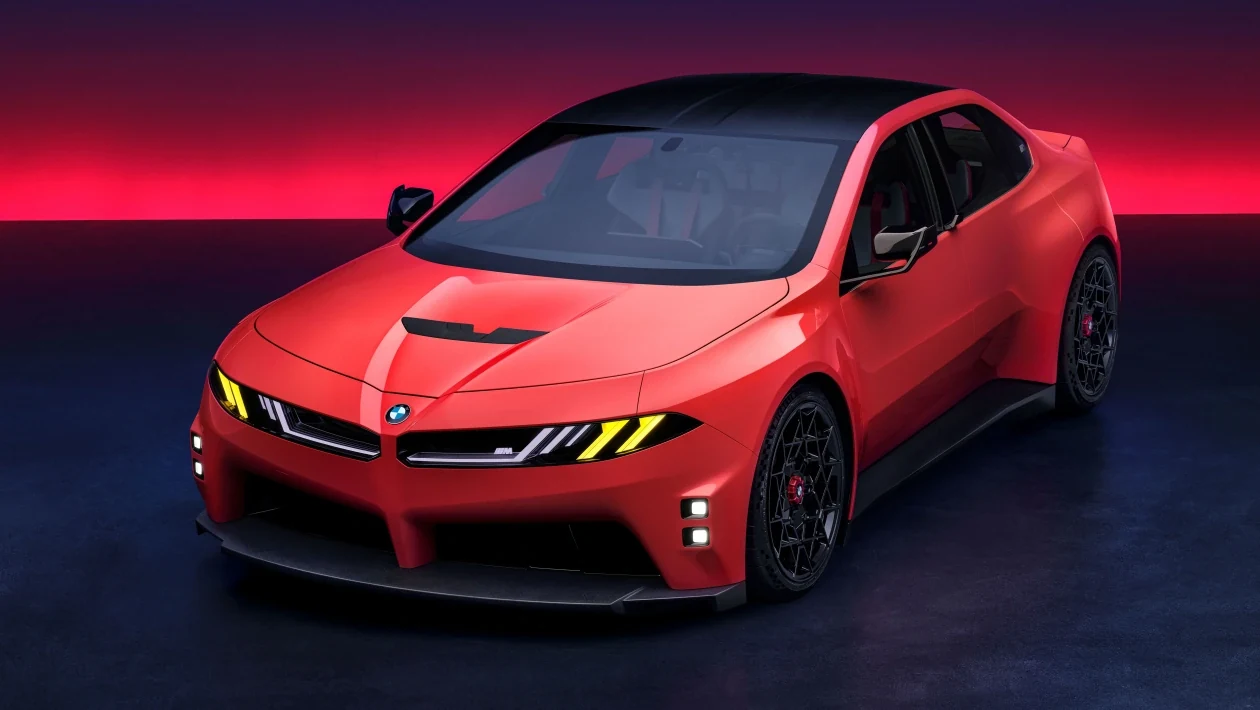
This announcement comes on the heels of the unveiling of the BMW M Neue Klasse Concept at this year’s 24 Hours of Le Mans, which provided the clearest glimpse yet of the next-generation electric M3.
The Most Powerful M3 Ever
BMW has confirmed that the electric M3 will be the most powerful production M3 to date. The platform supports up to four electric motors, potentially delivering an impressive 1,341bhp. Nevertheless, BMW promises that the production model will adhere closely to the characteristics that have defined each generation of the M3.
Christian Karg, Head of Vehicle Dynamics at BMW Group and a key engineer behind the current M3, M4, and limited-production CS and CSL models, also shared insights about the launch. Karg was instrumental in the development of the BMW M3 Touring, advocating for the project after using a V10-powered BMW M5 Touring as a family vehicle.
When asked about the primary challenge for BMW's first electric M3, Karg's response was clear: "It's not just about horsepower. While that's part of the equation, the precision of M cars is what sets them apart." Despite the platform's ability to generate hypercar levels of power, industry expectations suggest that the production version will likely produce between 650bhp and 750bhp.
Precision Over Power
Although these figures may seem modest compared to some of the most powerful electric performance vehicles on the market, BMW believes its technology provides a unique advantage. The four-motor powertrain allows for independent torque distribution to each wheel, creating an advanced torque-vectoring system aimed at enhancing agility, traction, and overall handling.
Karg noted, "Chinese competitors are introducing impressive technologies and innovations. We can't cover everything, so we concentrate on our heritage — what BMW signifies and what our customers expect from us."
Engineering Challenges Ahead
Creating an electric M3 involves more than simply adding power. BMW is rigorously testing prototypes at the Nürburgring, focusing on maintaining consistent performance during high-speed runs, managing battery temperatures, and minimizing the effects of added weight. Karg mentioned, "We test every car at the Nürburgring. Battery-electric vehicles bring challenges in sustaining high power output over prolonged periods, managing weight, and ensuring the car feels light and behaves like a true BMW M."
A major engineering goal for BMW is to ensure robust performance, even with low battery charge levels. Competitors like Mercedes-AMG have tackled this issue with cutting-edge battery technology inspired by Formula One, as showcased in the new AMG GT 4-Door. While Karg was tight-lipped about the final driving characteristics of the electric M3, he did promise that "it will be quite amazing."
The Petrol M3 is Here to Stay
BMW has also confirmed that the next-generation M3 will still be offered with an internal combustion engine. This new petrol variant will feature BMW's six-cylinder engine combined with the latest BMW M Ignite combustion technology, which was originally developed for racing, along with some hybrid assistance to meet future emissions regulations. Similar to the current generation, the new M3 will also be available as a Touring estate. Reports indicate that BMW may eventually introduce an electric M3 Touring, following plans for an electric i3 estate variant.
Inspired by BMW's Racing Heritage
The design of the M Neue Klasse Concept is heavily influenced by BMW M's motorsport legacy. Oliver Heilmer, Head of Design for BMW's Neue Klasse and M division, emphasized that every styling element serves a functional purpose. "At BMW M, form consistently follows function. Every detail is aimed at enhancing performance."
Heilmer added, "This project is particularly significant as it transitions the BMW M character into a new era." The concept showcases muscular proportions, sharply defined bodywork, and bold wheel arches that unmistakably identify it as an M model. The signature double-bubble carbon-fiber roof remains, although the distinctive aerodynamic fin on the wing mirrors seems to have been omitted.
At the front, the concept features a reimagined kidney grille, first seen on the latest 3 Series. This slimmer, cleaner design replaces the larger grille found on the current M3 and M4. Unique yellow lighting elements enhance visibility in adverse weather and are likely to appear on future BMW M production models. Square, track-inspired lighting signatures at both the front and rear pay homage to the BMW M Hybrid V8 race car competing at Le Mans.
Additionally, the sculpted V-shaped hood incorporates a substantial air outlet to cool the electric drivetrain, while the distinct three-piece front bumper draws inspiration from high-performance trimaran racing yachts and provides structural support for the oversized front splitter.