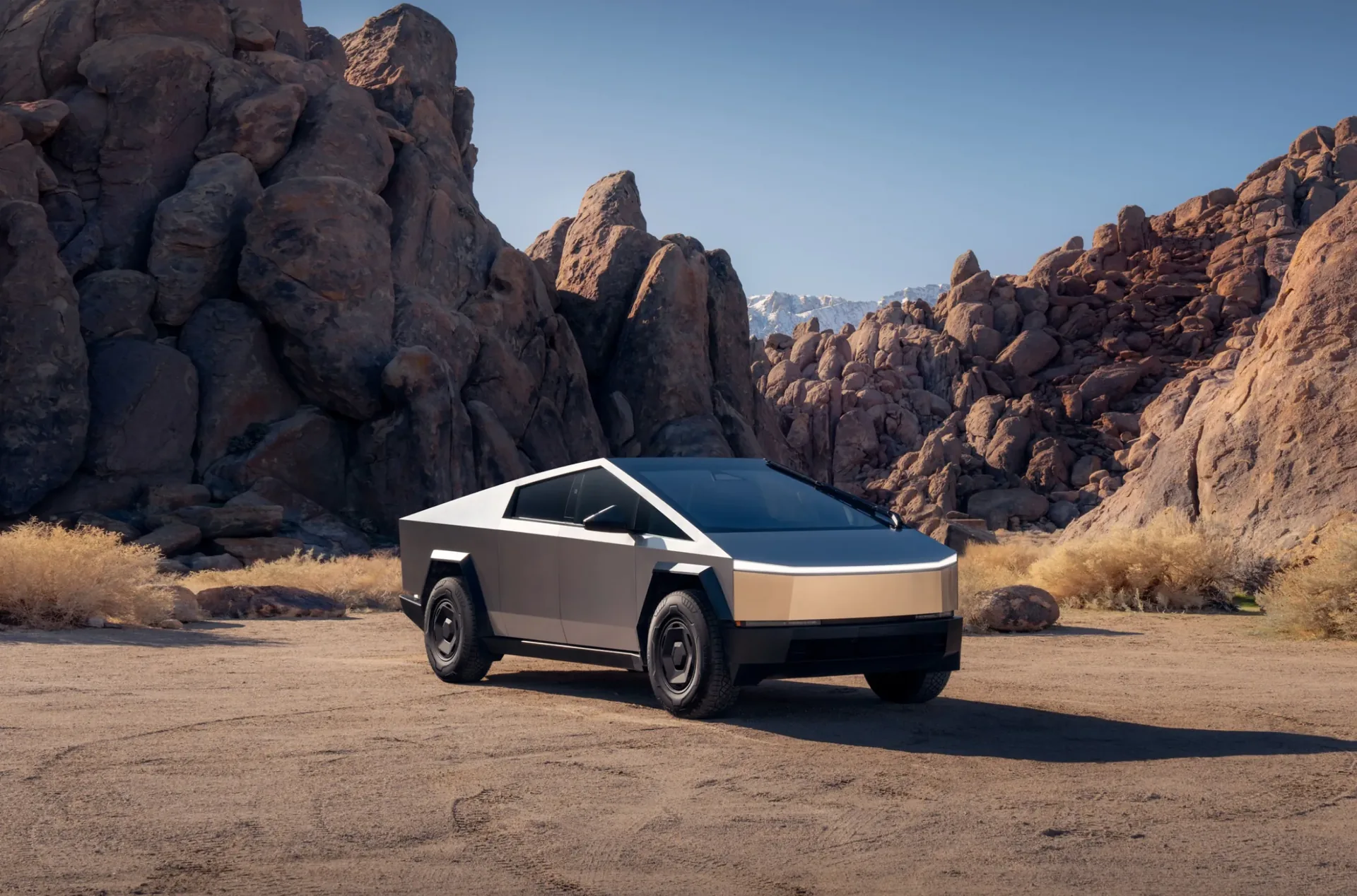
Ask me five years ago whether Cyprus was ready for electric cars and I'd have hesitated. Today I'd say it's one of the easiest places in Europe to live with a Tesla.
The island is small. Nicosia to Limassol is about 85 km. Larnaca to Paphos, the longest run most people ever make, is around 140 km. Winters are mild, so you never lose the 20–30% of range that cold costs drivers in northern Europe. Even a standard-range Model 3 covers a normal Cypriot week several times over.
So if range anxiety is what's keeping you up, you're worrying about the wrong thing.
In my experience people rarely regret buying a Tesla. They regret buying the wrong Tesla. Those are two completely different problems, and the second one is expensive.
The first question I'd ask
When someone tells me they're thinking about a Tesla, I don't ask Model 3 or Model Y.
I ask: where are you going to charge it?
That single answer decides whether you love the car or quietly resent it by month three.
If you have a house or a private parking space, it's easy. You plug in at night and leave every morning full. After a few weeks you stop thinking about it, the way you've stopped thinking about charging your phone. A 7 kW home wallbox adds roughly 40 km of range per hour — plug in at 19:00 and even a nearly empty Model 3 is full by breakfast. On a domestic tariff this is also by far the cheapest electricity you'll ever put in the car.
If you live in an apartment with no allocated parking, be honest with yourself before you buy. Cyprus's public network has genuinely improved, but building your daily routine around it is a different experience from plugging in at home.
That's why my advice never changes: don't choose the Tesla first. Work out where it charges first.
What charging in Cyprus actually looks like
Vague reassurance is useless here, so here are the actual players.
EAC e-charge is the Electricity Authority's public network and the most widely distributed one on the island, with stations across all districts — heaviest in Nicosia and Limassol, and points as far out as Polis and Platres. You get a mix of AC units and 50 kW DC. It runs through the EAC e-charge app, which shows availability and lets you start and stop sessions, and you can pay per session by card or subscribe and be billed periodically.
pcharge, Petrolina's network, describes itself as the largest in Cyprus. It's expanding AC and DC across public and private sites and rolling out fast and ultra-fast chargers at Petrolina, Eni and Agip stations — the first ultra-fast unit, 150 kW and upgradeable to 300 kW, went into the Larnaca GSZ service station. You can pay through the pcharge app, a Petrolina card, or by scanning the QR code with no registration at all.
GreenCharge, run by Green Energy Group, is the third network worth having. It publishes a live EV map of its charging locations, which you can open in a browser before you download anything: greencharge.greenenergy.com.cy. The same group also operates CYCHARGING, the installation side of the business — so if you end up wanting a wallbox at home, it's one Cypriot company covering both the public network and the charger on your wall.
One more worth knowing about, because it's among the fastest hardware on the island: Destination Porsche Limassol, the Porsche Centre run by A.I. Motokinisi, has two DC hyperchargers and two AC chargers on site. They're accessed with a Porsche RFID card, and non-Porsche EVs do use them — we've seen it. If you want that as a backup option for the occasional fast top-up, ask the Centre directly how a non-Porsche owner gets a card, because it isn't something they advertise.
For scale: aggregator databases now list well over three hundred charge points across the island, with Limassol the best-served city. It isn't a wasteland any more.
Two practical notes. Install PlugShare or Chargemap alongside the operator apps — they show every network at once, plus reliability comments from drivers who actually stopped there. And there is no Tesla Supercharger network in Cyprus, so a Tesla here charges on the same public infrastructure as every other EV. That's fine — European-spec cars use the same CCS2 connector the island's DC chargers use — but don't budget for Supercharger convenience.
Which Tesla, and who each one actually suits
The Model 3 is the one you will see most often here, and for most buyers it is the right answer. It balances range, size and price better than anything else in the line-up, and it fits Cypriot parking. Most examples on the island are used imports.
The Model Y is the same car with a boot and a higher seat. If you are coming out of an SUV, or you move people and luggage regularly, the extra space is worth more than the small penalty in efficiency.
The Model S is rarer and, used, is often the most car per euro on this list — an executive saloon for the money of a mid-spec crossover. Worth considering if long motorway runs and outright comfort matter more than running costs.
The Model X is the rarest here, mostly on price. The falcon doors are a talking point and a maintenance item; buy one because you need seven seats and a big boot, not because of the doors. There are very few on the island, which narrows both your choice and your eventual resale.
Most buyers worry about the wrong spec
The question I hear constantly is "should I get the Long Range?"
For most people in Cyprus, probably not.
Look at a normal week. Work. Supermarket. Dinner in Limassol. Paphos at the weekend. Maybe Troodos once a month. None of it troubles a standard-range Tesla, and none of it gets close to the point where a bigger battery changes your day.
On a fixed budget I'd take a newer car in better condition over a bigger battery every time. The extra kilometres sit unused; a younger car with better battery health and a cleaner history pays you back every day you own it.
Is a Tesla actually cheaper to run?
Mostly yes. Not magically so.
What doesn't go away: insurance, tyres — which wear faster than people expect, because EVs are heavy and deliver torque immediately — and body repairs, where parts can take time to reach the island.
What does go away: oil changes, spark plugs, filters, cambelts, exhausts, and most of the routine servicing an internal combustion car demands.
Cyprus also taxes EVs lightly. Annual road tax is based on CO2 emissions, and a fully electric car emits none at the tailpipe, so it sits at the bottom of the scale. You can check the exact figure for any car here before you commit.
The real saving is in the electricity, and it depends entirely on that first question. Home charging at a domestic tariff is dramatically cheaper than petrol. Public charging costs more — rates vary by operator and speed, and some private sites charge well above the network average — so if you're on public charging every day, run the numbers on your actual mileage rather than assuming.
Servicing is the part nobody asks about
Tesla does not have the service and dealer footprint here that the German brands have spent decades building. For routine work this rarely matters. For anything structural it can.
Body repairs are the usual sticking point: panels and parts are ordered in, and a car can sit while they travel. On a volume brand the same part is often on the island within a day. Warranty and diagnostic work can take longer than you would expect from a badge with a main dealer down the road.
None of this makes a Tesla difficult to own. It does mean that if you need the car back inside a week, plan for the possibility that you will not get it. Factor a longer off-road window into your thinking before you commit, particularly on an older car out of warranty. That is not an argument against buying one. It is an argument for knowing in advance.
The mistake I see again and again
People spend hours on colours, wheels and 0–100 times. Then they buy the first cheap imported Tesla they find.
That's backwards. The first thing I want to know about any used Tesla is which market it was built for.
Start with the obvious: Cyprus drives on the left, so the car has to be right-hand drive. That rules out most of continental Europe and leaves three real sources — the UK, Japan and Australia.
Now the part that actually matters, and the reason "just buy the cheaper one" can go badly wrong.
UK and European Teslas built since around May 2019 use Type 2 for AC and CCS2 for DC. That's exactly what Cyprus's public network speaks. Plug in anywhere, no adapters, no thought required.
Japanese-market Teslas are not automatically the same. Tesla launched the Model 3 in Japan with a CHAdeMO DC port — a Japanese fast-charging standard that is being phased out in Europe and is thin on the ground here. A car like that can't simply pull up to a CCS2 DC charger in Limassol. Adapters exist, but they add cost, add a thing to carry and lose, and CHAdeMO itself caps out far below modern CCS2 speeds.
This does not mean Japanese Teslas are bad. Many are excellent value, often with lower mileage and superb condition, and Japanese specification is generally well equipped. It means the connector is a specification question you have to answer before you fall in love with the price, per car, by VIN — not by assumption.
If you're looking at a Japan-sourced Tesla, ask exactly one question of whoever is selling it: what DC connector does this specific car have? If they can't answer precisely, that tells you something too.
What a Japanese car actually costs you in time
Price is the reason people look at Japan, and the prices are real: lower money, lower mileage, often exceptional condition.
The costs sit elsewhere. Shipping an electric vehicle out of Japan is slower than shipping a petrol car, because carriers cap how many they will load and the space is heavily booked. Five months from purchase to your driveway is a realistic figure, and it can run longer. If you need a car this quarter, Japan is not the route — the UK arrives in a fraction of the time.
Then there is the software. A Japanese-market car is configured for Japan, and depending on the vehicle it may need reconfiguring for Europe: navigation, language, connectivity and the regional settings behind them. Ask what has been done and what has not before money moves.
And the connector, covered above, which remains the thing to settle first — per car, by VIN.
When a hybrid is the better answer
Worth saying plainly, because it is true more often than an electric-car guide usually admits.
Hybrids are now the majority of what Cyprus registers — 51.9% of used saloon cars in the first seven months of 2026, against 4.6% electric. That is not fashion. It is a lot of people concluding that a car they can refuel anywhere fits their life better than a car they must plan around.
If you park on the street, live in a block with no allocated space, or drive to places where charging is thin, a hybrid will annoy you less. The Tesla is the better car when you can charge it at home. When you cannot, it stops being the better car quite quickly.
So — would I buy one?
If I lived in Cyprus with a house or a parking space where I could put in a wallbox? Without hesitation. I'd recommend a Tesla ahead of most petrol SUVs at the same money.
If I lived in an apartment with no charger and depended entirely on public stations, I'd think much harder — and I might well buy something else.
Tesla ownership in Cyprus isn't really about range. It isn't even about chargers. It's about whether the car fits the way you actually live. Get that right and it's hard not to enjoy it.
We commission Teslas from the UK, Japan and Australia, and we check the charge port, battery health and history before we buy anything — because on this island the connector is not a detail. Tell us what you're looking for.