BMW has confirmed the return of its flagship SUV. The second-generation X7 is due in 2026, with research and development already underway alongside the Neue Klasse line-up that begins with the iX3.
A fifth-generation X5 is also expected, but the X7 is the one preparing for a full revival — drawing design cues from the Neue Klasse concepts while keeping its position as the largest SUV in the range, with seven seats to compete against the Mercedes GLS and Range Rover.
Design
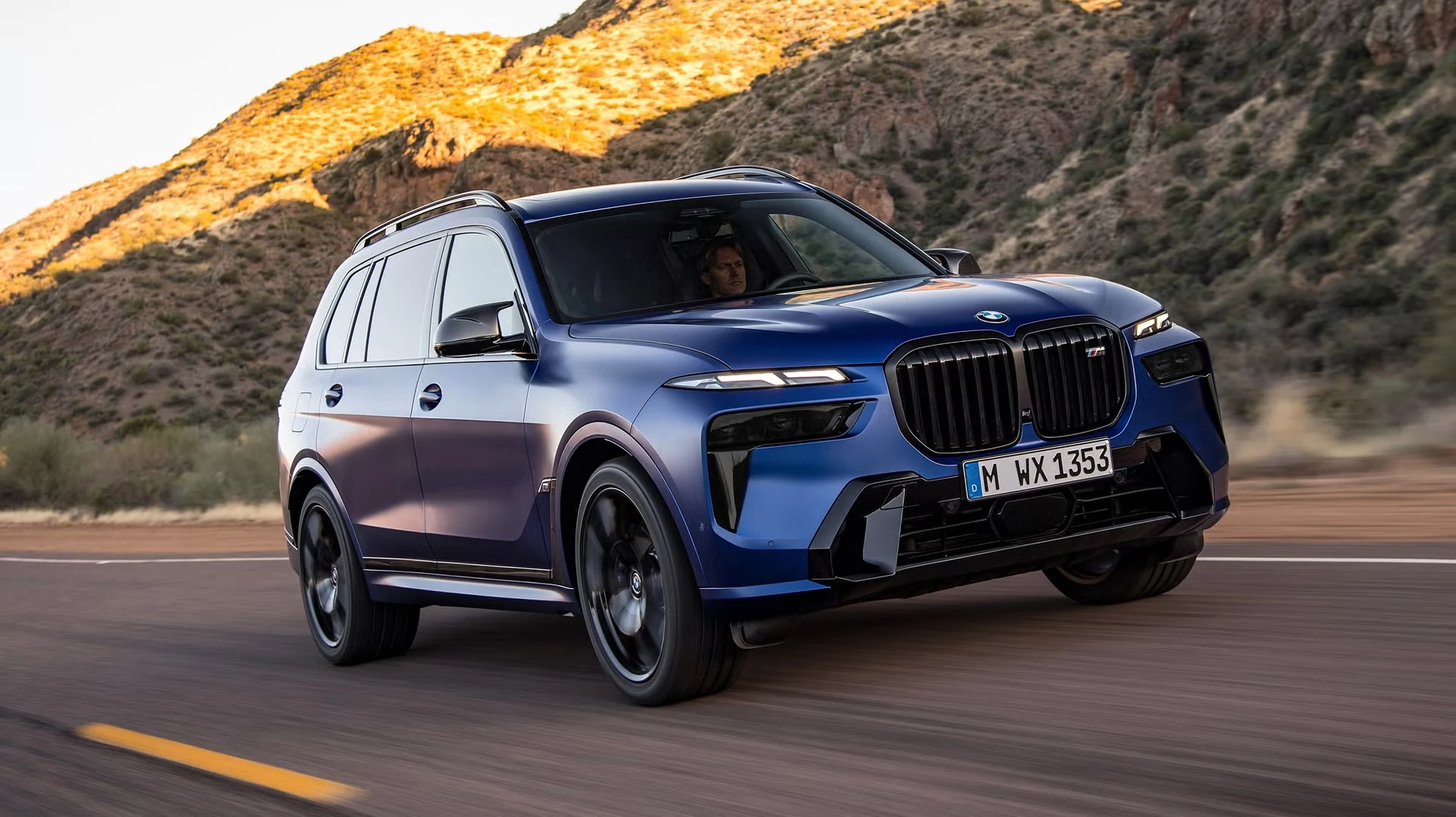
At the front, the split headlight arrangement is expected to continue — a signature shared with the current X7 and the 7 Series. Camouflaged prototypes show a substantial headlight cluster beneath a slim LED strip, with a vertical kidney grille at the centre.
Whether grille and headlights merge visually, as in the Neue Klasse concepts, remains open. Tabs on the upper door surfaces hint at a styling element also seen on X5 prototypes.
The rear appears less radically changed, though quad exhaust tips on the prototype point to an M50 or M60 performance variant. An overhanging roof spoiler adds to the sportier stance.
Platform and the iX7 question
The new X7 will use an updated version of BMW's CLAR architecture, engineered to carry both combustion and electric powertrains.
BMW has not confirmed a fully electric X7, but has trademarked the iX7 name. With the Neue Klasse rollout bringing an electric iX3, an i3 version of the 3 Series and eventually an i1 hatchback, an iX7 would fit the pattern.
The technology already exists. The i7 uses a 105.7 kWh battery across three outputs — a single-motor rear-drive version with 449 hp, a dual-motor all-wheel-drive at 537 hp, and a 650 hp flagship. For an SUV of this size, dual-motor all-wheel drive is the likely configuration.
What this means for a buyer in Cyprus
The current X7 is available now, and that matters more than the 2026 car. BMW builds the X7 in right-hand drive for the UK, which makes a UK import the straightforward route. Buying the outgoing generation as the new one approaches is usually the point at which a large SUV represents best value.
Seven seats are a specific Cyprus argument. Households here often run one car for everything — school runs, airport transfers to Larnaca and Paphos, weekend trips to the Troodos. A seven-seat SUV covers all of it, and there are relatively few of them in the used import market at any given moment.
Road tax on a large SUV needs checking before, not after. A diesel X7 and a plug-in hybrid X7 sit in noticeably different bands under the Cyprus emissions-based system, and over a typical ownership period that gap is not trivial. Put both through the road tax calculator.
On the iX7, wait for confirmation. If a fully electric X7 arrives it will sit in the lowest tax band — but nothing is confirmed, and a car that does not exist yet is not a plan.
We commission BMW to specification from the UK, Japan and Australia. See what is available now, or the full catalogue in Cyprus.