More than half the cars Cyprus registers are petrol-electric. In the first seven months of 2026 they were 51.9% of used saloon registrations, against 35.5% petrol, 8% diesel and 4.6% fully electric.
Europe is moving the same way. Across the EU in the first half of 2026, hybrid-electric models took 37.3% of new registrations — more than any other powertrain — while petrol and diesel together fell to 29.7%. That is 2.2 million cars in six months.
This guide covers premium saloons and estates. Premium SUVs are handled in a separate guide, with a pointer below.
The three kinds, and why the badge on the boot means nothing
The headline share conceals something. Break Europe's figures down and the largest single category is not what most people picture.
In January to April 2026 the split across Europe ran roughly: mild hybrids 25%, conventional petrol and diesel 31%, battery-electric 20%, full hybrids 14%, plug-in hybrids 10%.
Mild hybrids are the biggest electrified category on the continent, and they are the least electric thing in the list.
Mild hybrid, or MHEV. A 48-volt motor assists the engine but cannot move the car by itself, ever. Smoother stop-start, a few percent off consumption. A petrol car with a helper — and a great many cars wearing a hybrid badge in Europe are exactly this. Pay petrol-car money, because on resale nobody pays a premium for the badge.
Full hybrid, or self-charging. Drives on electricity at low speed and in traffic, runs the engine when it needs to, replenishes its own battery through braking. You never plug it in. This is the type that suits Cyprus best and the one most buyers actually mean.
Plug-in hybrid, or PHEV. A much larger battery and real electric range — executive saloons claim 100 to 110 km — then it behaves conventionally. Charged nightly it covers most Cypriot weeks without petrol. Never charged, you are carrying 200 kg of dead weight.
The decision is simple once framed properly. Can you charge at home? If yes, a PHEV is the strongest option on the island. If no, buy a self-charger and stop thinking about it.
What a hybrid costs to run in Cyprus
Cyprus calculates road tax on CO2 for cars registered from 2014. This is where the PHEV advantage turns into money: official figures for current plug-ins are extraordinarily low, because the test assumes a charged battery. A BMW 330e is rated at 19 g/km, which drops a 3 Series to the bottom of the Cyprus scale, alongside cars half its size.
A full hybrid emits more but still less than the equivalent petrol model. Only fully electric cars are exempt. Run the exact figure in the road tax calculator before deciding — across five years the gap between adjacent bands adds up.
Fuel is where the saving lands, and it lands unevenly. A self-charger is at its best in exactly the driving Cyprus produces most of: town traffic, short trips, stop-start, low speeds. At a constant 100 km/h on the Nicosia–Limassol run the advantage narrows considerably, because the electric side has little to contribute.
Servicing is conventional: oil, filters, brakes. Pads last longer, because regenerative braking does much of the work. No charging infrastructure, no adapters, no connector standard to verify.
The battery stopped being a bogeyman years ago. Warranties commonly run to eight years, the packs are small and gently worked, the technology has two decades behind it. On a used car, just ask when it was last checked.
Why Japanese hybrids are the better buy
This surprises people who have read about importing electric cars.
A Japanese-market electric car brings a real complication: many were built with the CHAdeMO fast-charging port, and Cyprus builds CCS2. That has to be resolved per car, by VIN, before you buy.
A self-charger has no such problem. It never plugs into anything, so there is no connector to match, no adapter to carry, no standard to verify. The single biggest technical risk in importing a Japanese EV simply does not exist here.
And Japan is the deepest such market on earth. Hybrids have been sold there for over twenty-five years, the domestic fleet is saturated, mileages are low. Closed auctions move enormous volume weekly, with an independent inspection sheet on every lot.
Right-hand drive is the practical default here — left-hand-drive cars are legally registrable, but resale into a right-hand-drive market is the constraint that matters — which points to three source markets: the UK, Japan, Australia. For a self-charger all three work cleanly, and Japan often wins on condition and price.
Two things need checking on anything out of Japan, and only one of them is about charging.
Software applies to every Japanese car, electrified or not. A Japanese-market vehicle is configured for its home market: menu language, navigation maps, radio bands, connected services and the regional settings underneath them. Depending on the car, some or all of that needs reconfiguring for Europe. A properly converted car behaves like a European one; a half-converted car works until the day you need the function that was missed. Ask what has been done, what works now, and whether the car will keep receiving updates — before money moves.
The connector only affects plug-ins. A Japanese PHEV may carry a Type 1 AC socket rather than the Type 2 Cyprus uses, so confirm it per car by VIN, exactly as you would on an electric car. A full hybrid is unaffected, because it never plugs in. For plug-ins, the UK avoids both issues at once: European specification from the factory, and no conversion work on arrival.
Lexus: the Japanese route into premium
Lexus matters here for a reason that has nothing to do with badge appeal. It is the one premium marque whose hybrid line-up is deep in the Japanese domestic market, which means the sourcing logic above applies to it directly — low mileage, excellent condition, an inspection sheet on every lot, and no connector question on a self-charger.
Lexus ES 300h. The quiet answer to a 5 Series. Front-wheel drive and softly sprung, so it will not entertain a keen driver, but the refinement and the build quality are exceptional and the running costs are unusually low for the class. Depreciation has already happened on a used car, and reliability is not a question anyone asks about a Lexus.
Lexus LS 500h. A full-size limousine for the money of a mid-spec German executive saloon. The multi-stage hybrid system is unusual and effective, the cabin is genuinely special, and the used market barely knows it exists. If comfort matters more than dynamics, nothing else here comes close on value.
Lexus NX 450h+. The plug-in, with real electric range and the same reliability record. The natural choice if you want a premium plug-in without the German maintenance profile.
The trade-off with Lexus is consistent across the range: superb refinement and reliability, less driver involvement than the Germans, and a lower profile. For a car that will be lived with rather than shown off, that is often the right trade.
Executive and luxury plug-ins
The fastest-moving part of the market: electric ranges here have transformed in two years. Anything in this section needs home charging — without it you pay for a battery, carry its weight, and lose to a simpler hybrid costing less.
Mercedes E 300 e. The class benchmark for range. A 25.4 kWh battery gives a claimed 114 km, the longest in the executive class and enough to cover a Cypriot working week without the engine starting. Pillowy ride, superb refinement, an interior borrowed from the S-Class. The estate is underrated in Cyprus. One car to do everything, if you can plug it in.
BMW 530e. Named Premium Hybrid Car of the Year by Auto Express in both 2024 and 2025, and only narrowly beaten in 2026. A 19.4 kWh battery, up to 103 km claimed, 295 bhp — and it still drives like a 5 Series, which is the point. The keen driver's pick. The Touring is the one to have: bigger boot, negligible penalty.
BMW 550e xDrive. The same car with a 3.0-litre six and 489 bhp. Around 88 km electric, and genuinely quick. The plug-in tax position without giving up the six. One compromise: price.
Audi A6 TFSI e. A 20.7 kWh battery, roughly 103 km in the saloon, 101 in the Avant. The quietest and most restrained of the German three, with the usual Audi cabin advantage. The Avant is one of the best estates on sale, full stop.
Audi A5 e-hybrid. The newer, slightly smaller alternative, and the car that took Auto Express's premium hybrid title in 2026 ahead of the 530e. Its hybrid system reads the navigation route to decide when to spend electricity — which works better than it sounds. The Avant fixes the saloon's tight rear headroom.
BMW 330e. The smaller, cheaper way into the same technology. A 19.5 kWh battery, up to 101 km, and 19 g/km CO2 — on the Cyprus scale, about as low as a petrol-engined car goes. Saloon or Touring. On value, arguably the strongest car in this section, and the British used market is full of them.
Volvo V90 and V60 Recharge. The Scandinavian answer. The estates are the good ones: a top V60 makes 455 bhp, absurd in a family wagon and entirely welcome. Cabin quality matches the Germans; on safety the Swede is still ahead.
Porsche Panamera E-Hybrid. The one car in this section that is genuinely quick and genuinely a Porsche. It carries the plug-in tax position without any of the compromise that phrase usually implies, and the chassis is a class above everything else here. Expensive to buy and expensive to run, and worth it to the right owner.
Mercedes S 580 e. The plug-in S-Class, with an electric range that covers a full working week of ordinary use. Effectively silent, and the most comfortable car on this page by a distance. Depreciation on a used example is brutal, which is precisely what makes it interesting.
BMW 750e xDrive. The 7 Series equivalent: a six-cylinder plug-in with genuine performance and a cabin that has moved a long way upmarket. A different character to the S-Class — firmer, more driver-focused — and rarer on the island.
Audi A8 60 TFSI e. The understated one. Less presence than the Mercedes, less drama than the BMW, and for some buyers that is the entire appeal.
One diesel oddity: the Mercedes E 300 de pairs the plug-in system with a diesel, returning an official 5.3 l/100 km against 7.3 for the petrol E 300 e. For anyone covering long motorway distances it is the more logical car. Almost nobody considers it, which on an island of inter-city runs is an oversight.
If you want a premium SUV instead
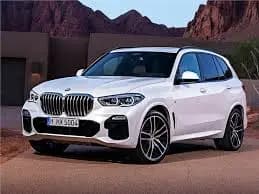
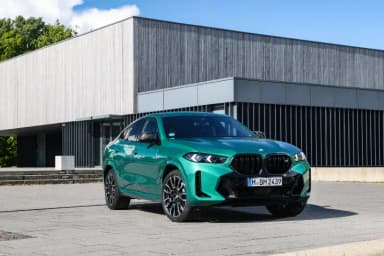
Most of the plug-in money in Europe is spent on high-riding cars, and the choice is broad: the Lexus RX, which in 500h and 450h+ form is the most complete large hybrid SUV Lexus has built and the natural step up from the smaller NX; the Volvo XC60 and XC90, the latter still capable of 455 bhp and seven seats; the Audi Q5 TFSI e; the Mercedes GLC 300 e; the BMW X5 xDrive50e; and at the top the Range Rover Sport P550e, whose 31.8 kWh battery is larger than the one in some small electric cars.
Each gets proper treatment in the luxury SUV guide. The powertrain logic here applies to all of them unchanged: a plug-in only earns its price if it goes on charge overnight.
The mistakes worth avoiding
Buying a plug-in you cannot charge. The most expensive error available in this segment. You pay for the battery, carry its weight, and get worse economy than the self-charger you could have bought instead.
Paying full price for a mild system. At 25% of the European market these are everywhere, and the badge on the boot often says nothing useful. Read the specification.
Trusting the brochure on the motorway. Official figures flatter these cars because the cycle is town-biased, and flatter plug-ins most of all, because the test assumes a full battery. Mostly Nicosia to Limassol at speed? Expect a fraction of the claim.
Ignoring the auction sheet on a Japanese car. The most honest condition report in the used-car world. It costs nothing and tells you more than twenty photographs.
We commission these cars from the UK, Japan and Australia, read the auction sheets before bidding, and match the specification to how the car will actually be used. Tell us what you are looking for, or see what is available on the island now.