How do you turn around a luxury car manufacturer that continues to post significant losses? According to Aston Martin CEO Adrian Hallmark, the answer lies in launching more powerful and more exclusive versions of its current SUVs and sports cars, expanding personalisation options and fundamentally restructuring the business.
The former Bentley Motors CEO has now been leading Aston Martin for almost two years and is clear about the challenge ahead. "It's a turnaround," Hallmark says.
More high-performance models are on the way
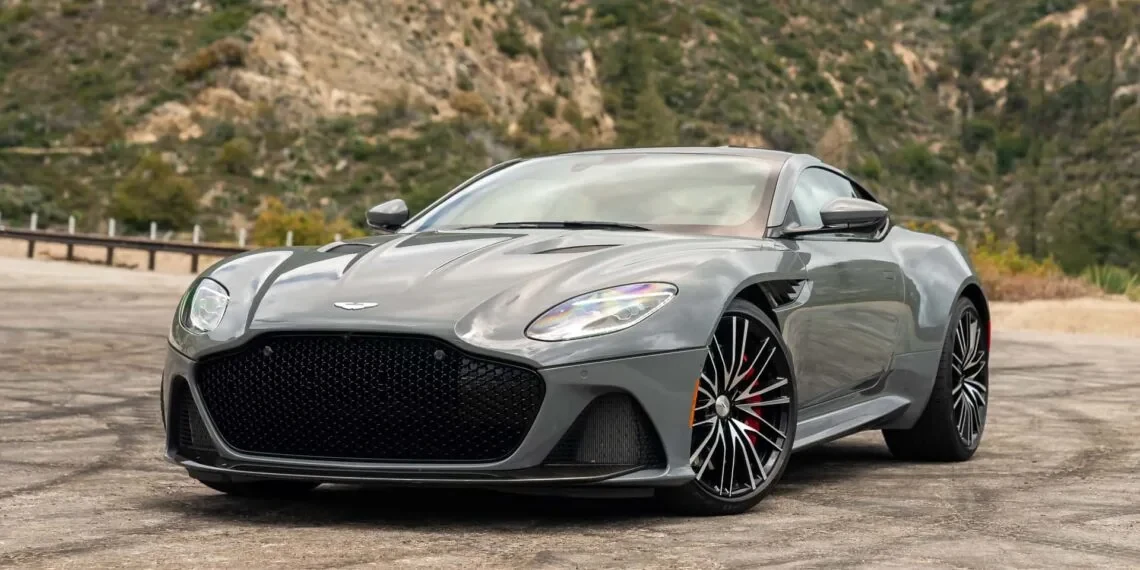
The first stage of Aston Martin's recovery plan focuses on expanding its existing model range. More dynamic S versions of the DBX, Vantage and DB12 have already been introduced, bringing higher power outputs, quicker gearshifts and more aggressive styling.
"When I joined, we had only two Vantage derivatives planned over five years," Hallmark explains. "Porsche might launch 15 to 24 variants over the same period." Following the Vantage GT3's third-place finish in class at this year's 24 Hours of Le Mans, Hallmark also hinted that a road-going GT3-inspired version could become reality.
"That's not a bad idea," he says with a smile. "I can't give you dates, but believe me, it's all coming. We've got seven or eight product launches every year for the next few years before we even reach the next-generation cars."
More options mean more revenue
Aston Martin is also placing much greater emphasis on personalisation. After reviewing the brand's catalogue, Hallmark discovered that Ferrari, Lamborghini, Rolls-Royce, Bentley, McLaren and Porsche collectively offered nearly 200 options that Aston Martin did not.
That gap potentially cost the company both customers and valuable revenue. To address this, Aston Martin is introducing more premium options, including titanium wheels, titanium exhaust systems and upgraded audio systems.
The goal is not only to increase profit per vehicle but also to encourage existing owners to replace their cars more frequently while supporting stronger residual values.
Restructuring the business
Product expansion is only one part of the strategy. The second is a significant restructuring programme.
When Lawrence Stroll and the Yew Tree Consortium invested in Aston Martin in 2020, the business expected annual production to reach around 10,000 vehicles. For comparison, Ferrari delivered 13,752 cars during its record-breaking 2024, while Aston Martin sold 5,448 vehicles despite investing approximately €2.56 billion into the company.
According to Hallmark, expectations simply became disconnected from market reality. "Aston turned up to the biggest ever party just as the lights were coming on," he says. "We launched all these new cars just as the luxury market entered a slowdown." Within his first month as CEO, Hallmark reduced planned production by around 1,000 vehicles, implemented two rounds of redundancies and resized the business to support annual production of roughly 6,000 cars.
He says these measures have already reduced Aston Martin's cost base by approximately 30%. "We currently have 26 programmes focused on improving costs, profitability and cash flow. We're about nine months into that process, and you'll start seeing the benefits towards the end of this year and into next year."
A return to profit remains the priority
The improvements cannot come soon enough. Earlier this year, Aston Martin sold the perpetual naming rights to its Formula 1 team to owner Lawrence Stroll, raising an additional €58 million. The company has also faced several profit warnings during Hallmark's tenure, while international trade challenges last year contributed to a pre-tax loss of €220 million.
Does Aston Martin need additional investors? Hallmark's answer is straightforward: No. "If we deliver our plan, we'll generate our own cash. Our number one priority is getting the business to a point where it's profitable and generating cash instead of burning it. "Our shareholders have been incredibly supportive. But even I get embarrassed asking them for more money."
Originally, Aston Martin expected the turnaround to take around 18 months. Today, Hallmark believes the company is likely to return to profitability in around two years. "Watch this space," he says.