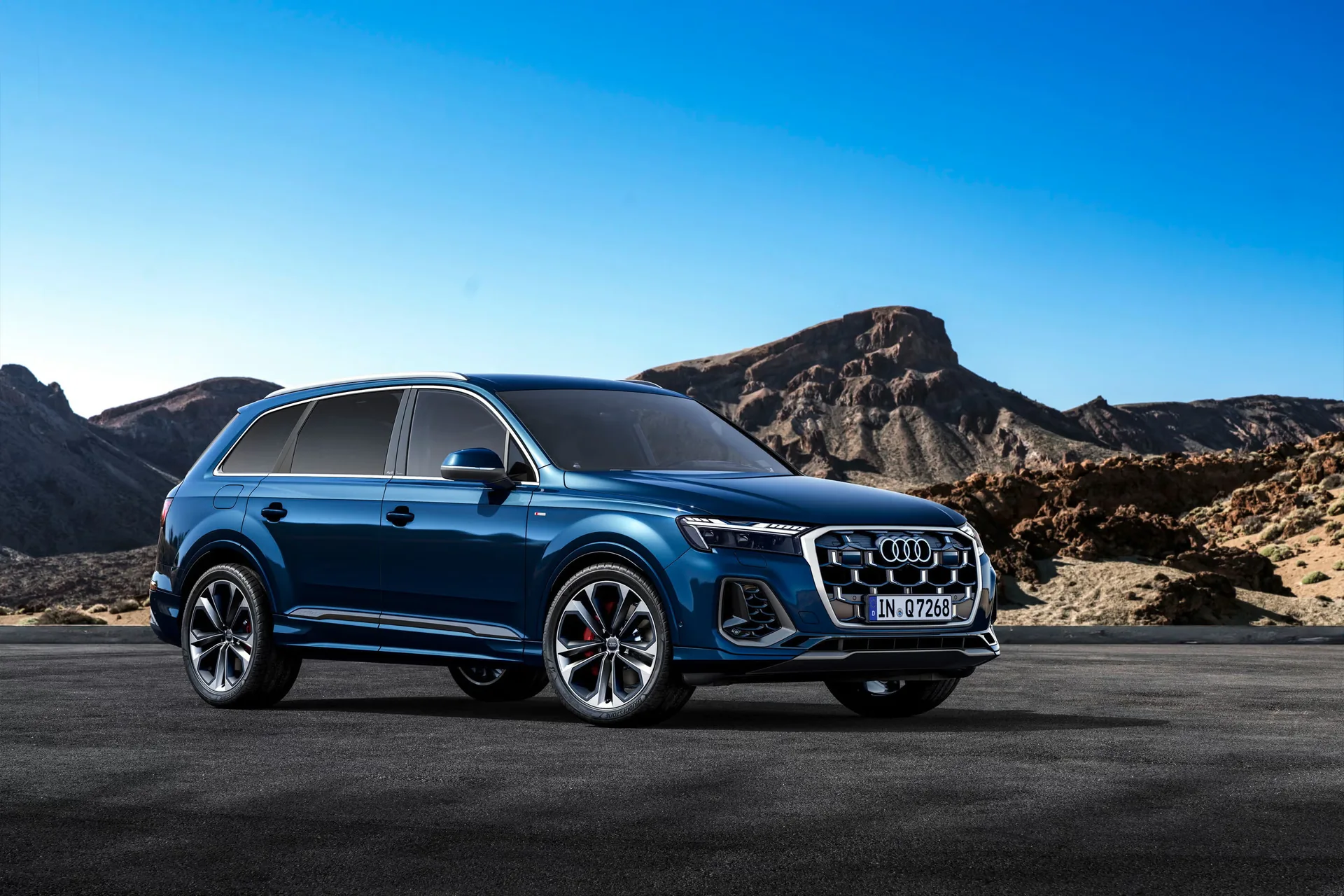
Slowly and methodically, Audi has been reshaping its large SUV portfolio. In the coming months, its plans will materialise with the arrival of the all-new Audi Q7 – a next-generation interpretation of the popular seven-seat SUV, previewed here in exclusive imagery.
Given the strong position of the model in the segment, the new Q7 is expected to be priced roughly at the level of the current version – starting from €87,000 at the launch in Europe, which will begin later this year.
At the core of the Q7 is the new PPC platform, representing a significant evolution of the MLB Evo architecture used in the current model. Just as with the transition from the Audi A4 to the new A5, this platform brings a new electronic architecture designed for more advanced and flexible electrified powertrains.
Among them is a new plug-in hybrid with a V6: a twin-turbo gasoline engine paired with an electric motor and a lithium-ion battery. Exact specifications have not yet been revealed, but power is expected to be around 400 hp, with an electric range of 95–130 km and up to 800 km in combined mode.
The PPC platform also supports a range of mild-hybrid engines, including the current V6 TDI diesel. Familiar from models like the A6 and Q5, this engine produces 295 hp and 580 Nm, available from just 1,800 rpm.
The mild-hybrid system adds another 24 hp thanks to a compact electric motor, allowing for electric-only driving at low speeds, assisting with maneuvers, and enabling coasting with the engine off on the highway. It is expected to work in conjunction with a 7-speed automated transmission.
Gasoline mild-hybrid versions and a sporty SQ7 variant will also be available, which will likely retain the 4.0-liter twin-turbo V8. The chassis will also receive significant updates, focusing on balancing comfort and handling. Features will include adaptive air suspension, rear-axle steering, and an active roll stabilization system, which should make the large SUV noticeably more maneuverable.
All of this will be hidden under a completely new body. Although Audi is currently undergoing a broader design transition under the leadership of Massimo Frascelli, the Q7 will be one of the last models developed under former design chief Marc Lichte.
At the front, the new Q7 will feature a large grille and two-level optics. Like the smaller Q3, the upper elements will serve as daytime running lights and turn signals, while the main headlights will be positioned lower – with matrix or fully digital lighting depending on the version.
At the rear, there will be more complex and larger taillights in the spirit of the A6: with OLED elements, a light strip across the width, and integrated brake lights. Overall, the design will become cleaner – with smoother surfaces, hidden door handles, and minimalism in details. Wheel sizes will range from 20 to 23 inches.
Inside, the Q7 will transition to a new architecture of curved displays from Audi: a digital instrument panel measuring 11.9 inches, a central screen of 14.5 inches, and a separate display for the passenger at 10.9 inches. Material quality will remain a key priority – with an abundance of leather, soft surfaces, and contrasting stitching.
The new Q7 will continue to compete with models such as the Mercedes GLE, BMW X5, and Range Rover Sport. Meanwhile, the GLE is undergoing a scheduled update, the Range Rover will be limited to minor revisions, while the next generation BMW X5 will debut as a completely new model – and will become a serious competitor. All Q7 versions will maintain a seven-seat layout in a 2-3-2 configuration, although plug-in hybrids may experience a slight loss of space due to battery placement.
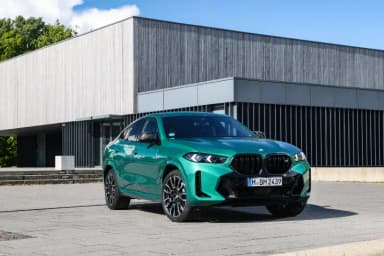
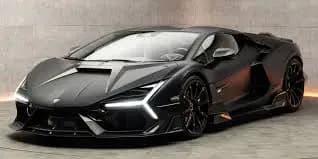
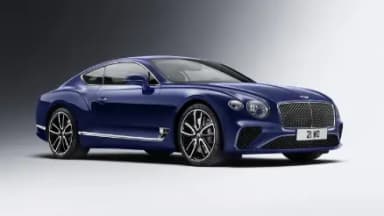
Additionally, the Q7 will serve as the basis for an entire family of SUVs within the group: its PPC platform will be used in future hybrid versions of the Bentley Bentayga, Lamborghini Urus, and Porsche Cayenne. This reflects the new strategy of the Volkswagen Group aimed at more flexible use of shared architectures after abandoning the SSP-Sport platform from Porsche.
10/04/2026
Next-Generation Audi Q7: Hybrid Power and Complete Redesign

Paste a UK listing, see the full Cyprus price
Duty, VAT, shipping and registration in one figure, in about a minute.
Calculate UK import cost